
How Light Changes a Space
The feeling of a room changes throughout the day. Art does too.

Light doesn’t stop at the landscape. It follows us home.
We often think of art as something fixed—a composition, a palette, a finished piece on the wall. But the experience of it is anything but static.
Because the light in your space is always changing.
Morning light is soft and directional. It reveals texture.
Midday light flattens and brightens, pulling color forward.
Evening light warms everything, deepening tones and softening contrast.
The same piece can elicit a completely different feeling.
It’s something I’ve started paying closer attention to, not just in the studio, but in the spaces we live in and visit.
A room isn’t one thing. It evolves throughout the day.
What feels calm in the morning might feel energized by afternoon.
What feels subtle in one light begins to glow in another.
And the art within that space becomes part of that rhythm.
The pieces we’re drawn to often aren’t just about color or composition—they’re about a feeling we want to live inside.
A sense of calm.
A sense of energy.
A sense of being grounded, or inspired, or open.
But what’s interesting is that feelings aren’t fixed either.
They, too, can shift with the light.
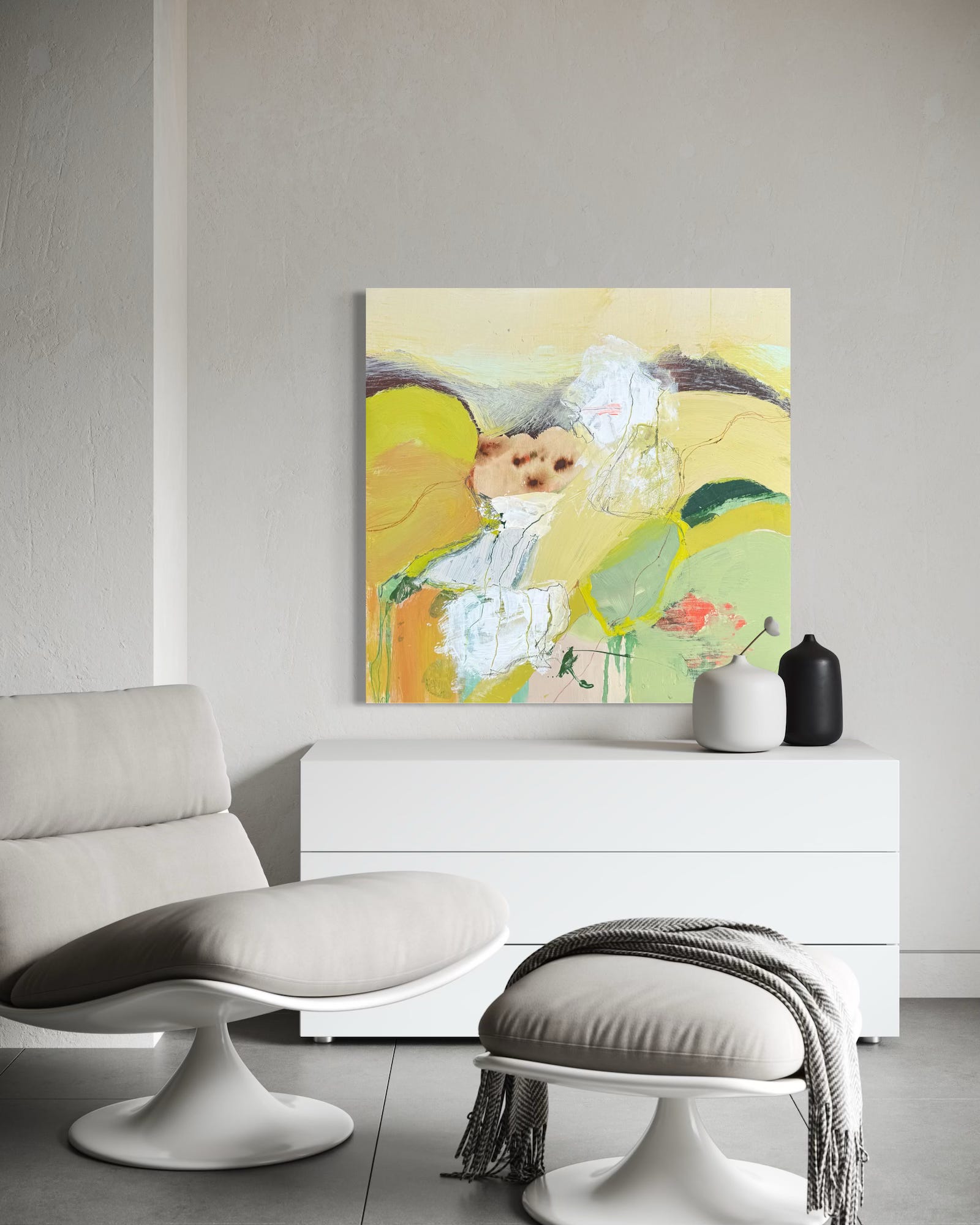
A painting that feels quiet and atmospheric in the morning might feel rich and immersive by evening.
A piece with movement might feel bold in bright light, and contemplative as shadows settle in.
Spaces aren’t designed for a single moment—they’re designed to be lived in, across many moments, and changing light patterns.
And the art we choose becomes something we return to again and again, seeing it differently each time.
Not because it’s changed.
But because the light has.
Maybe that’s what we’re really choosing when we bring art into our homes—not just how it looks, but how we want to feel, in every kind of light.